
Public Safety
Real-Time Reliability for Split-Second Decisions.
Connect voice, video, data and command from single-unit operations to citywide response.
Market Summary
Built for the Mission as It Changes.
Public-safety operations can move from covert surveillance and first response to multi-agency incidents and national events. Teams need communications that stay connected across urban, remote and infrastructure-challenged environments while making live video, voice, data and command information usable across jurisdictions. Interoperability and rapid deployment become essential as agencies, assets and command roles change during a response.
What Wave Brings
Shape the Network Around the Incident.
Drawing on DTC’s public-safety portfolio, Wave supports integrated, scalable, mission-ready video paths for aircraft, vehicles, deployable cameras and command locations. Self-forming, self-healing IP Mesh, RF links, fiber and encoding can be shaped around the incident footprint and existing systems rather than replacing every part of the environment.
Production Workflow
Build Your Public Safety Workflow.
Connect aircraft, vehicles and the incident scene through resilient receive, mesh and relay paths to authorized command and operational viewers.
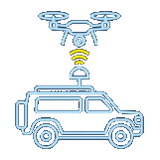
See the Scene
Aircraft / vehicle / scene
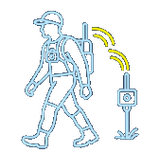
Transmit Live Information
RF / IP transmit
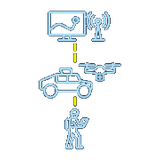
Extend the Incident Network
Receive / mesh / relay

Decode and Route
Command decode + route

Inform Authorized Teams
Operational viewers
PUBLIC SAFETY CHALLENGES
Start With the Operational Need.
Airborne & Mobile Video
Move live imagery from aircraft, vehicles and on-scene positions.
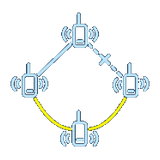
Incident-Site IP Mesh
Build self-forming, self-healing paths when infrastructure is limited.
Multi-Agency Interoperability
Bridge video and command workflows across existing partner systems.

Command & Evidence Distribution
Decode, route, monitor and preserve operational feeds.
Proof & Guidance
Experience, Evidence and Practical Guidance.
Practical guidance helps agencies plan resilient field communications, alternate paths and authorized information flow across changing incidents.
Selection & Planning
Keep the Next Decision One Click Away.
Explore practical starting points for scaling the response, planning for infrastructure loss and unifying the command picture.
Response Scale
Scale From Unit to City
Design the communications path for changing incident size and agency count.
Resilience
Plan for Infrastructure Loss
Use mesh, relay and alternative paths when fixed systems are limited.
Shared Awareness
Unify the Command Picture
Route voice, video, data and status to authorized operational teams.